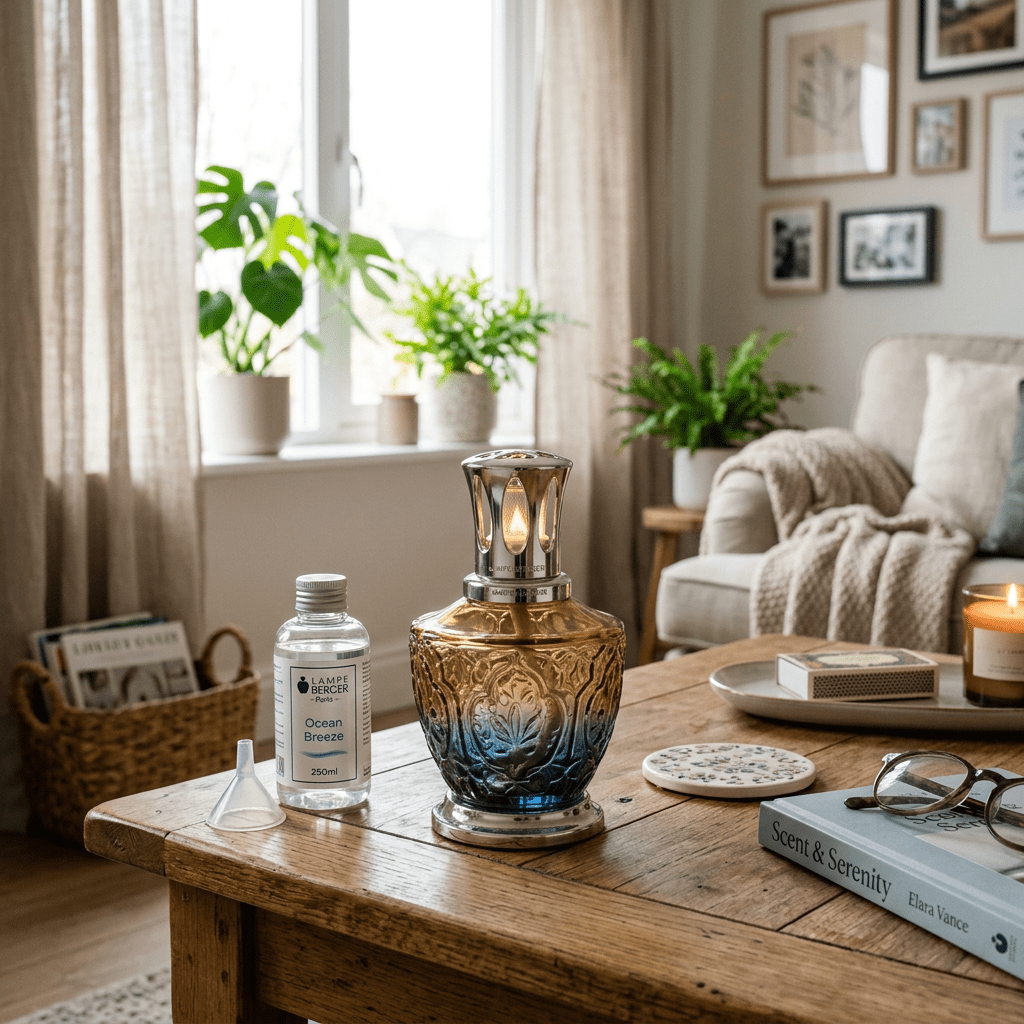
We often see shopping as just paying for an item, but consumption is a complex process in which goods, services, or ideas are used and reshaped into value. (Babin & Harris, 2021) Consumer behavior is ultimately a set of value seeking activities meant to address realized needs. Recently, I experienced this value-seeking process firsthand when I bought a Lampe Berger from Maison Berger Paris. What seemed like a simple utility purchase, such as making a room smell nice, was actually a highly deliberate consumer choice, influenced by Maison Berger’s skillful segmentation of the market.
According to company historical records published by Maison Berger Paris (2023a), the product was originally invented in 1898 by a pharmacy dispenser named Maurice Berger to purify the air in hospitals. Understanding how the brand evolved this functional medical tool into a global home luxury item requires a deep look at consumer behavior and strategic market segmentation.
Maison Berger does not use an undifferentiated marketing approach where a business treats all consumers as one mass market. Instead, they are highly differentiated marketers, targeting specific segments with tailored products based on distinct consumer motivations. In my own buying experience, I noticed three distinct segments they target. The first is the function driven purifier, a segment motivated by health, wellness, and cleanliness. Because the Lampe Berger utilizes a unique catalytic burner system that actually eliminates airborne molecules and odors rather than just masking them, it appeals to pet owners, cooks, and health conscious consumers who prioritize clean air. The institutional history analyzed by Invest in Normandy (2024) emphasizes this exact scientific foundation as a major driver for modern wellness consumers. The second segment is the design and decor enthusiast, which Maison Berger Canada (2023) notes is supported by frequent collaborations with high-end designers to create exquisite porcelain, crystal, and art glass vessels. For this segment, the lamp is a premium piece of home decor and an expression of personal style. The third segment is the fragrance connoisseur. These consumers are driven by the sensory experience, seeking complex, fine perfume-grade home scents and building a long-term relationship marketing cycle with the brand through repeat refill purchases as described by Maison Berger Paris (2023b). By identifying these touchpoints, Maison Berger turns a basic need into a multi-sensory, high-value experience.
When a business moves away from a production orientation and shifts toward a true customer orientation, executing a segmentation strategy requires precision. Based on consumer behavior theory, (Babin & Harris, 2021), there are four vital points to keep in mind. First, focus on total value creation. Segmentation is not just about dividing people by demographics like age or income. It is about mapping how different groups derive value. The basic consumption process concludes with value, which is defined as benefits minus costs. Your strategy must ensure that the specific benefits designed for a segment heavily outweigh the financial and effort costs for that specific group. Second, market competitiveness drives the need to segment. In a highly competitive environment, consumers have choices and will not tolerate poor positioning.As resource advantage theory suggests, firms gain a competitive edge by acquiring resources that enable them to deliver unique value. Segmentation helps you identify the precise market segments where your product’s specific attributes give you that advantage. Third, leverage big data and predictive analytics. Consumer behavior is highly dynamic. Modern segmentation should not rely on guesswork. Utilizing big data and predictive analytics enables companies to monitor real-time digital touchpoints, shifts in buying power, and evolving consumer trends, enabling highly accurate, agile segment adjustments. Fourth, avoid over-segmentation. While niche marketing and one-to-one marketing can be incredibly lucrative, a segment must remain large enough to be profitable and sustainable.If you try to serve very narrow market segments, the costs of tailoring your marketing efforts might end up being higher than the revenue those segments can bring in.
During my online shopping and browsing through lifestyle media recently, I have noticed the rise of a distinct new micro segment: the work from home “scent scaper”. With millions of professionals now permanently working remotely or in hybrid roles like mine, the home office has become a high-stress environment. Scent-scaping is a growing consumer trend where people use different fragrances to partition their day temporally. For example, they might use a crisp, energizing citrus scent at 9:00 AM to trigger focus, and a soothing lavender or cedarwood scent at 5:00 PM to signal the psychological shift from work hours to relaxing at home.
To target this segment, I suggest a strategy focused on psychographic lifestyle preferences and behavioral usage patterns. For the product mix, the company could launch a curated productivity trio set of lamp oils. The packaging and marketing would explicitly focus on cognitive benefits such as clarity for the morning, focus for the afternoon slump, and decompression for the evening. For marketing channels, since this is a digitally native, tech-adjacent audience, the strategy should use netnography, a qualitative research tool used to study online communities, targeting remote work forums, productivity spaces, and home office design channels on social media. (Babin & Harris, 2021) For positioning, the brand should position the product not as a luxury item or a simple air purifier, but as a functional productivity tool essential for modern workspace wellness. By aligning the product’s attributes with the specific psychological needs of this remote workforce, Maison Berger could transform a classic product into an essential modern workplace utility.
References
Babin, B. J., & Harris, E. (2021). CB (9th ed.). Cengage Learning US. https://mbsdirect.vitalsource.com/books/9798214339405
Invest in Normandy. (2024). Maison Berger Paris: a century old company at the crossroads of science and creation. Retrieved from https://www.investinnormandy.com/maison-berger-paris-a-century-old-company-at-the-crossroads-of-science-and-creation/
Maison Berger Canada. (2023). Our history. Retrieved from https://maison-berger.ca/pages/our-history
Maison Berger Paris. (2023a). Maison Berger Paris brand, 125 years of history. Retrieved from https://www.maison-berger.co.uk/pages/history
Maison Berger Paris. (2023b). The perfuming and innovative catalytic lamp. Retrieved from https://www.maison-berger.co.uk/blogs/news/perfuming-and-innovative-lampe-berger
 Monica's marketing mind
Leave a comment